And how do Democrats intend to stop him?
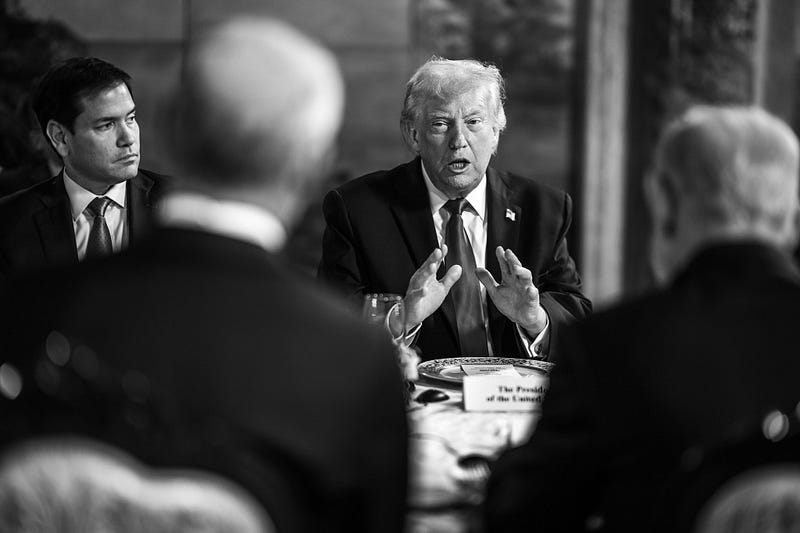
2025 was a whirlwind of activity for the second/first President Donald J. Trump administration.
Key peace agreements were pursued; some with great success, others still pending a diplomatic breakthrough. Trump inherited several major conflicts that happened on the watch former President Joe Biden. Some have been quelled and though none have grown since Trump took office, the war between Russia and Ukraine seems as far from mediation as ever.
Tariffs were wielded with a dab hand. Some were extremely successful. Others were challenged in the courts system. Some of those cases are still pending. Like the previous administration, and most presidential administrations, they win some court challenges and lose others.
2025 also saw a fair to middling amount of trolling from President Donald Trump. In his defense, he did survive two assassination attempts, injury, financial persecution, legal jeopardy, and countless media smears to wield the ultimate bully pulpit against his critics now.
Some argue, even some Republicans — as they always have — that Donald Trump is too much, too mean, too rude. Others defend the President, saying he is exactly as tough-talking, thick-skinned, and combative as he needs to be.
And after a year of the second/first Trump administration, President Donald Trump has established enough of a track record to allow political analysts to predict what 2026 is going to be like in the White House.
You don’t need a crystal ball to figure out President Donald Trump’s legislative priorities for 2026. He’s been saying them out loud.
Start with the border. In recent speeches, Trump keeps coming back to the same point: illegal crossings are down, enforcement works, and he wants Congress to lock those policies in. Finish the wall. Bring back Remain in Mexico. End catch-and-release. Expand deportations. This isn’t subtle. Immigration enforcement is the backbone of his agenda, not a side issue.
Then there’s the economy — especially trade. Trump frames tariffs as a feature, not a flaw. He argues they protect American workers, bring manufacturing home, and give the U.S. leverage it’s been afraid to use for decades. With the 2017 tax cuts now extended, the next step is obvious: make the Trump economic model harder for future administrations to unwind.
Finally, affordability — most clearly on prescription drugs. Trump has been far more concrete here than critics admit. He keeps returning to the idea that Americans shouldn’t pay more than anyone else in the world, reviving “Most Favored Nation” pricing and tying drug costs directly to his broader trade agenda.
What’s missing matters, too. There’s little talk of sweeping new healthcare systems or massive social programs. The focus is narrower, more transactional — and very Trump.
Whether Congress goes along is another question.
And Trump won’t be running unopposed in 2026. Democratic Party leadership has a plan to fight Trump and deep-six his ambitions.
What is it?
In a word, campaigning.
Democratic leadership isn’t planning to beat Trump with a sweeping new vision so much as with a sustained attack on his record — especially the economy. Ken Martin, the new DNC chair, has been rather blunt about it.
In response to Trump’s late-2025 prime-time address, Martin accused the administration of driving up costs, “pricing millions out of health care,” and handing out tax cuts to “CEOs and billionaires.” The word Democrats keep returning to is affordability — rent, healthcare, groceries, everyday costs voters actually feel.
Martin has also made rebuilding party campaign infrastructure a priority, pushing year-round organizing. The goal is simple: define Trump and his policies early, instead of playing defense six months too late.
On Capitol Hill, Democrats want to offer contrast as well as confrontation. Hakeem Jeffries has leaned into hearings and theater— threats on democracy, January 6 commemorations, and budget showdowns — while Democrats more broadly are using funding deadlines to press for extensions of Affordable Care Act tax credits and healthcare protections.
Behind the scenes, there’s disagreement about tone. Some Democrats want a pure affordability message. Others want something bigger. But there’s broad agreement on the target: Trump’s economic record, his governing style, and the costs they believe voters will associate with both by 2026.
Who will prove the stronger?
(Contributing writer, Brooke Bell)